In This Article
Understanding Claude Token Economics
Tokens are the fundamental unit of billing for Claude API requests. Every piece of text—whether it's your prompt, the model's response, or context window usage—consumes tokens. Understanding how tokens translate to costs is essential for any organization deploying Claude at scale. Unlike some pricing models where you pay per request, token-based pricing gives you granular control over expenses and direct visibility into what you're paying for.
Claude's pricing structure separates input and output tokens because they have different computational costs. Input tokens (your prompts and context) cost significantly less per token than output tokens (model-generated responses). For example, Claude Sonnet 4.6 charges approximately $3 per million input tokens and $15 per million output tokens. This 5x difference reflects the fact that generating new content requires more computational resources than processing existing text. Understanding this ratio helps you optimize prompts that minimize output tokens while maintaining quality.
Typical costs vary dramatically by use case. A contract review task processing a 50-page PDF might consume 100,000-150,000 input tokens and generate 2,000-5,000 output tokens, costing roughly $0.50-$0.80 per document depending on your model choice. Code generation tasks often have higher output token costs—generating a complex function might produce 1,000-3,000 output tokens, costing $0.02-$0.06 per request. Data analysis workflows processing structured data tend to be cheaper per unit, while creative writing and comprehensive documentation generation are among the most expensive per token due to high output volume.
To calculate expected monthly spend, start by defining your monthly request volume and average token consumption per request type. For example: if you process 500 contracts monthly at 100K input tokens each, plus 2,000 code generation requests averaging 1,500 output tokens each, your monthly Sonnet spend would be roughly 550M input tokens ($1,650) plus 3B output tokens ($45). Add 20-30% overhead for retries and testing. This baseline enables you to set budgets, justify spend to stakeholders, and identify optimization opportunities. Most organizations discover their initial estimates are 30-50% higher than actual usage once they implement caching and better prompt engineering.
Pricing tiers incentivize higher volume commitment. The Claude API offers progressive discounts: pay-as-you-go pricing applies at lower volumes, but organizations committing to $1,000+ monthly spend often negotiate volume discounts of 10-30%. Understanding your consumption trajectory helps you plan infrastructure costs and negotiate optimal pricing with Anthropic before scaling to production volumes.
Calculate Your Claude API Costs
Get a personalized analysis of your expected Claude spending based on your use case. Our assessment tool estimates monthly costs and identifies optimization opportunities specific to your workflows.
Start Free AssessmentThe Top 5 Claude Cost Drains (And How to Fix Them)
Five common patterns consistently inflate Claude API costs across organizations. Identifying and fixing these cost drains typically reduces spending by 40-60% with zero quality loss. Most organizations implement all five fixes within 2-4 weeks, often discovering unexpected optimization opportunities in the process.
1. Over-Prompting: Sending Entire Documents When You Only Need Sections is the single largest cost drain. Organizations frequently include complete 50-page contracts, 500-page manuals, or entire codebases when asking Claude to extract one specific section or answer one question. A common pattern: sending a 10,000-token instruction manual to ask a single clarification question that requires only the relevant 200-token section. The fix is surgical extraction—parse documents programmatically to include only relevant sections, use vector search to retrieve matching context, or ask Claude to first identify which section it needs before processing the full document. This single fix typically reduces costs 20-30% immediately.
2. Context Window Waste occurs when organizations use more tokens than necessary for their task. Claude Haiku 4.5 has a 200K context window; Claude Sonnet 4.6 has 200K; Claude Opus 4.6 has 200K. Many teams include full context windows of available information "just in case" the model needs it, but comprehensive systems prompts combined with complete documentation often mean only 10-15% of loaded context is actually relevant. The fix: implement context pruning strategies that include only demonstrably necessary information. Many teams use Claude Haiku in a two-step process—first to identify relevant context from a large corpus, then pass only that context to Sonnet for the actual task. This reduces context waste by 60-70%.
3. Redundant API Calls happen when the same context is queried multiple times without caching. A typical pattern: processing a customer document through five different analysis workflows (risk assessment, compliance review, opportunity extraction, etc.) means loading and paying for the same context five times. The fix is implementing request batching or prompt caching (detailed in section 4) so the context is loaded once and reused. Organizations typically eliminate 30-40% of API calls through this optimization alone.
4. No Caching Strategy is discussed in detail in section 4, but deserves mention here because it's the highest-impact cost drain for organizations processing repeated context. If you review similar contracts, analyze standard documents, or process the same codebases repeatedly, you're likely paying full price for cached tokens every single time. Implementing prompt caching reduces costs on repeated context by 80-90%. This is particularly valuable for knowledge base queries, customer support, and analytical workflows that reference the same documents repeatedly.
5. Wrong Model Selection for the task at hand—using Sonnet for simple classification or Opus for basic extraction—is an invisible cost drain because quality metrics don't reveal it. An organization using Sonnet for 1,000 daily classification tasks could switch to Haiku and likely see minimal quality difference while reducing costs by 75%. The fix is implementing a tiered model selection strategy (covered in section 3): route simple tasks to Haiku, moderate complexity to Sonnet, and only route genuinely complex reasoning to Opus. This systematic approach typically reduces model-driven costs by 40-60%.
Prompt Engineering for Cost Reduction
Careful prompt engineering reduces both input and output tokens without sacrificing quality. The most cost-effective prompts are concise, structured, and task-focused. A 2,000-token verbose prompt and a 400-token well-structured prompt asking for the same analysis often produce identical quality outputs. The difference is a 5x reduction in input costs plus 10-20% shorter output responses because the model isn't confused or over-prompted.
Concise System Prompts are foundational. Many teams copy lengthy brand guidelines, multi-page documentation, or comprehensive instruction sets into system prompts, then repeat the same content in user messages. A system prompt should contain only stable, reusable instructions that apply to multiple requests. Move task-specific, request-specific, or context-specific information into user messages. For example: instead of a 3,000-token system prompt covering "how to analyze contracts" with 50 example contract types, use a 200-token system prompt defining your analysis framework, then pass specific instructions and the actual contract in the user message. This typical refactor reduces system prompt tokens by 70-80% with zero quality loss.
Batching Requests consolidates multiple independent tasks into single API calls. Instead of sending 10 extraction tasks separately, combine them into one prompt: "Extract X, Y, and Z from the following document." This typically reduces the overhead tokens (model reasoning about the task, context loading setup) by 70-80% for batched requests. A customer service system analyzing 100 support tickets separately (100 API calls) can instead batch tickets into groups of 10-15, reducing API calls by 85-90% while often improving quality through consistency. Trade-off: batch processing is asynchronous (not real-time), but for non-urgent tasks (data processing, analysis, reporting), batching delivers massive cost and latency improvements.
Prompt Templates and Structured Formats reduce repetition and output verbosity. Define reusable templates for common workflows, then populate them with specific data. For example: create a template for "Contract Review Results" with sections for risks, compliance issues, and recommendations. Reusing this template across 100 contracts means the model produces consistent, predictable output structure every time, typically 20-30% shorter than ad-hoc unstructured responses. Additionally, specify output format explicitly: "Respond with a JSON object containing fields: risk_level (high/medium/low), issues (array of strings), recommendations (array of strings)." Explicit structure requirements reduce output tokens by 15-25% compared to natural language responses.
Optimal Instruction Length is shorter than you probably think. Research shows diminishing returns beyond 300-500 words of instruction for most tasks. A 500-word detailed prompt and a 150-word clear, well-structured prompt produce similar quality outputs. The efficiency comes from clarity, not volume. Include: (1) task definition in 1-2 sentences, (2) context requirements (if any), (3) output format specification, (4) 1-2 examples if the task is non-obvious. Skip: verbose preambles, repeated clarifications, example edge cases the model doesn't need to see. Reducing instruction length by 50% typically reduces input costs 20-30% with minimal quality impact.
Model Selection Strategy is the highest-leverage prompt engineering decision. Claude Haiku 4.5 costs 1/3 as much as Sonnet and 1/6 as much as Opus while handling 90% of common tasks (classification, extraction, summarization, basic analysis). Claude Sonnet 4.6 costs 1/2 as much as Opus and handles moderate reasoning, creative writing, and complex analysis. Claude Opus 4.6 is reserved for multi-step reasoning, complex problem-solving, and tasks requiring deep context integration. A typical optimization: audit your current workload, classify tasks by complexity, and route accordingly. Organizations routing 60% of tasks to Haiku, 35% to Sonnet, and 5% to Opus typically see 60-70% cost reductions compared to running everything on Sonnet or Opus.
Caching, Batching and API Cost Controls
Prompt caching is the highest-impact cost optimization available for organizations with repeated context. The mechanism is simple: include a cache_control parameter in your API requests to mark specific content as cacheable. Subsequent requests that include the same cached content pay 90% less for those tokens ($0.30 per million cached input tokens vs. $3 per million regular input tokens for Sonnet). For organizations processing the same documents repeatedly—reviewing similar contracts, answering questions about standard materials, analyzing historical code—caching can reduce costs by 80%+ on cached tokens.
Prompt caching is most effective for: system prompts reused across thousands of requests (mark your system prompt as cacheable and cache hits compound across all requests), large reference documents processed multiple times (cache the contract template, codebases, or knowledge bases referenced by multiple queries), and multi-turn conversations where earlier context is reused (cache the conversation history). A customer support system that references the same 50-page knowledge base across 10,000 monthly queries can cache the knowledge base once and save $150+ monthly on that single optimization alone. More realistic: combine caching with model selection and concise prompts, and organizations see 3-5x reductions in support-related API costs.
The cache works only when the prompt prefix is identical. If your cached system prompt is 2,000 tokens, but 10 different variations exist (because of dynamic personalization), you lose caching efficiency. The fix: separate stable content (cache this) from dynamic content (pass separately). Cache your base system prompt and reusable instruction content; pass variable data (customer name, specific request details) separately in the user message. This architectural pattern maximizes cache hit rates across thousands of requests.
Batch API is underutilized but delivers 5x cost reduction for non-real-time workloads. Instead of processing requests immediately, the Batch API queues them and processes in low-priority batches, typically completing within 24 hours while charging 50% less per token. For data processing, overnight analysis jobs, report generation, and any non-urgent workflow, batch processing is cost-optimal. A team processing 1,000 documents overnight could batch them all into a single batch request (one queue operation) instead of 1,000 individual API calls (1,000 queue operations plus overhead), reducing both cost and latency variability. Trade-off: batching introduces 24-hour latency, so it's unsuitable for real-time use cases but ideal for backend data processing.
Setting max_tokens Limits prevents unexpectedly long output from inflating costs. By default, Claude can generate up to the full context window of output tokens if needed. For most tasks, you don't need that flexibility. If you're extracting key points from a document, set max_tokens=500 (most summaries need less than 300 tokens). If you're generating a blog section, set max_tokens=1200. This prevents edge cases where the model generates 10,000 tokens of output when 1,000 would suffice. Additionally, if output consistently exceeds your max_tokens limit, that signals your task might need different prompting (maybe you're asking for too much output) or a different approach (maybe you should batch subtasks separately). Max tokens limits also improve latency because the model stops generation once the limit is reached.
Usage Tier Optimization involves negotiating volume discounts with Anthropic if you're spending $1,000+ monthly. Most organizations qualify for 10-30% discounts at higher commitment levels. If your analysis shows you'll spend $5,000+ monthly, reach out to Anthropic sales to discuss pricing tiers. Similarly, rate limits should be understood: the free tier has low rate limits (perfect for testing), paid tier has generous limits, and enterprise accounts can negotiate higher limits. If you're hitting rate limits despite low overall spending, consider batching (which doesn't count against per-request rate limits) or distributing load across multiple API keys.
Measuring Claude ROI: Complete Framework
Learn how to calculate return on investment for your Claude API spend. This white paper covers ROI metrics, cost tracking, business impact measurement, and optimization strategies specific to your industry and use case.
Download White PaperBuilding a Cost Governance Framework
As Claude API usage scales across an organization, cost governance becomes critical. Without visibility and controls, spending can grow 2-3x faster than actual productivity gains because teams optimize for quality, features, or speed rather than cost. A governance framework prevents this by establishing budgets, tracking spending, creating alerts, and implementing chargeback models that align incentives across teams.
Setting Team Budgets starts with baseline usage analysis. Calculate your organization's current Claude spending (or projected spending if you're new), then allocate budgets to teams based on their planned usage: data science teams processing large datasets, customer support running AI agents, product engineering integrating Claude for features. Allocate 10-15% contingency for testing and experimentation. Monthly budgets should be reviewed quarterly as teams optimize and usage patterns stabilize. A typical allocation for a 100-person company: $500 monthly for product engineering, $300 for customer success, $200 for data science, with $100 buffer. As spending stabilizes and teams optimize, you'll often find actual usage drops 30-40% vs. initial projections.
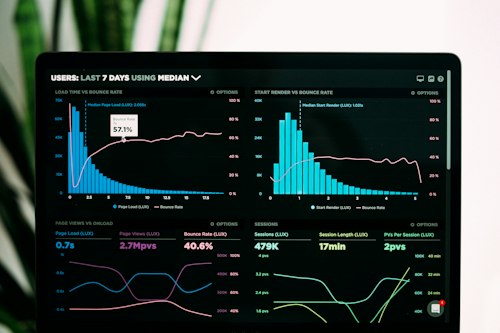
Usage Dashboards and Monitoring provide visibility that drives optimization. Implement dashboards tracking: total API spend (YTD and monthly), spending by team, spending by model (Haiku vs. Sonnet vs. Opus), cost per output unit (cost per customer served, cost per analysis completed, cost per support ticket handled), and month-over-month trend. Most organizations discover that without dashboards, spending patterns are invisible, so teams unknowingly use expensive models for cheap tasks. Once spending is visible, optimization becomes obvious and self-reinforcing—teams see "we spent $1,200 on classification tasks" and immediately ask "shouldn't we be using Haiku?" Visibility converts cost optimization from a compliance requirement into a team best practice.
Alerts and Thresholds prevent budget surprises. Set alerts at 75% of monthly budget and 100% of monthly budget so teams are aware of approaching limits. For development and testing environments, implement more aggressive alerts (50% threshold) to catch accidental high-cost patterns early. When an alert fires, it shouldn't trigger panic—it should trigger investigation: "Why did spending jump 40% this week? Did we add a new workflow? Is there a bug in prompt engineering?" Alerts reframe cost management as a continuous optimization process rather than a budget constraint.
Chargeback Models align spending incentives. In a centralized budget model, teams have no incentive to optimize costs (the CFO pays for everything). In a chargeback model, teams are billed for their Claude usage, so they optimize naturally. A typical chargeback structure: charge teams their actual API costs with 5-10% markup for infrastructure overhead. This creates powerful incentives to batch requests, implement caching, and use cheaper models for simple tasks. Teams quickly realize that switching 50 daily classification tasks from Sonnet to Haiku saves them $100+ monthly, making the optimization worth 1 hour of engineering time. Chargeback models often reduce organizational spending by 30-50% in the first 6 months simply by aligning incentives.
Cost Per Department and ROI Tracking ensures that spending is generating proportional value. Track metrics like: cost per customer served (customer support), cost per code review (engineering), cost per analysis (data science). Then correlate with outcome metrics: customer satisfaction, deployment frequency, analysis quality. Teams spending $5,000 monthly but serving 10,000 customers have $0.50 cost per customer—excellent ROI. Teams spending $2,000 monthly but processing only 50 analyses have $40 cost per analysis—potentially problematic. This cost-per-unit thinking reveals which teams are generating outsized value from Claude investment and which might benefit from optimization or different approaches. It also enables data-driven budget reallocation: if customer support generates 10x ROI but data science generates 2x ROI, that suggests increasing support budget and reviewing data science approaches.
Frequently Asked Questions
Claude API pricing tiers vary by model and usage volume. Input tokens cost $3 per million for Sonnet 4.6 and $15 per million for output tokens; Haiku 4.5 costs $0.80 per million input and $4 per million output; Opus 4.6 costs $15 per million input and $75 per million output. Typical enterprise spend ranges from $500 to $5,000+ monthly depending on usage intensity. Most organizations see 3-8x ROI on Claude API investment through automation of routine tasks, faster development cycles, improved decision-making, and reduced need for human staff on certain workflows. Volume discounts typically apply at $1,000+ monthly commitment, reducing effective rates by 10-30%.
Four primary strategies can reduce costs 40-70% without quality loss. First, implement prompt caching for repeated context (80%+ cost reduction on cached tokens). Second, select the right model for each task: Haiku for classification/extraction, Sonnet for analysis/writing, Opus for complex reasoning (can reduce costs 60%+). Third, batch non-real-time requests to consolidate overhead and qualify for batch API 50% discount. Fourth, write more concise, structured prompts that eliminate redundant information and reduce output verbosity (typical 15-25% savings). Implementing all four strategies simultaneously often reduces costs 50-70% while maintaining or improving quality.
Prompt caching caches frequently reused context—like system prompts, large documents, or code repositories—so subsequent requests only pay 90% less for cached tokens ($0.30 per million vs. $3 per million for Sonnet input). When you make a request with cacheable content, the cache stores it; when you make another request with identical cacheable content, you're billed only for the new, non-cached tokens. This delivers 80-90% cost reduction on cached tokens, making it ideal for knowledge base queries (same knowledge base, thousands of customer questions), document analysis (similar contracts analyzed by different workflows), and customer support (same FAQs queried repeatedly). Organizations processing the same documents repeatedly can see 50-80% reductions in per-request costs by implementing caching strategically.
Use Claude Haiku 4.5 for simple classification, extraction, and routing tasks—it costs 1/3 as much as Sonnet while handling 90% of basic workflows. Use Claude Sonnet 4.6 for content analysis, writing, and moderate reasoning—it balances cost and capability for most business workflows. Reserve Claude Opus 4.6 for genuinely complex multi-step reasoning and tasks requiring deep context integration. Matching model to task complexity can reduce costs 60%+ while maintaining output quality. A typical optimization: audit your current workload, classify tasks by complexity, and route 50-60% to Haiku, 30-40% to Sonnet, and 5-10% to Opus. Most organizations find this allocation sustainable long-term while capturing significant cost savings.
Related Articles