Table of Contents
Why Traditional Pipeline Reviews Fail What Claude Actually Analyzes in Your Pipeline Building a Claude Deal Scoring Framework Detecting Risk Signals Before They Kill Deals Improving Forecast Accuracy with AI Analysis Implementation: Getting Your Team Set UpWhy Traditional Pipeline Reviews Fail
The average enterprise sales team spends 4–6 hours per week in pipeline review meetings. A typical 10-person team wastes roughly 50 hours a week on meetings where the primary activity is a sales manager reading Salesforce notes aloud while reps sit passively.
The root problem is information asymmetry. Managers can't read 30 deal notes before a call, so they rely on reps to summarize — and reps have obvious incentive to present deals optimistically. This creates chronic forecast inaccuracy: the average B2B sales organization misses its quarterly forecast by 15–25%.
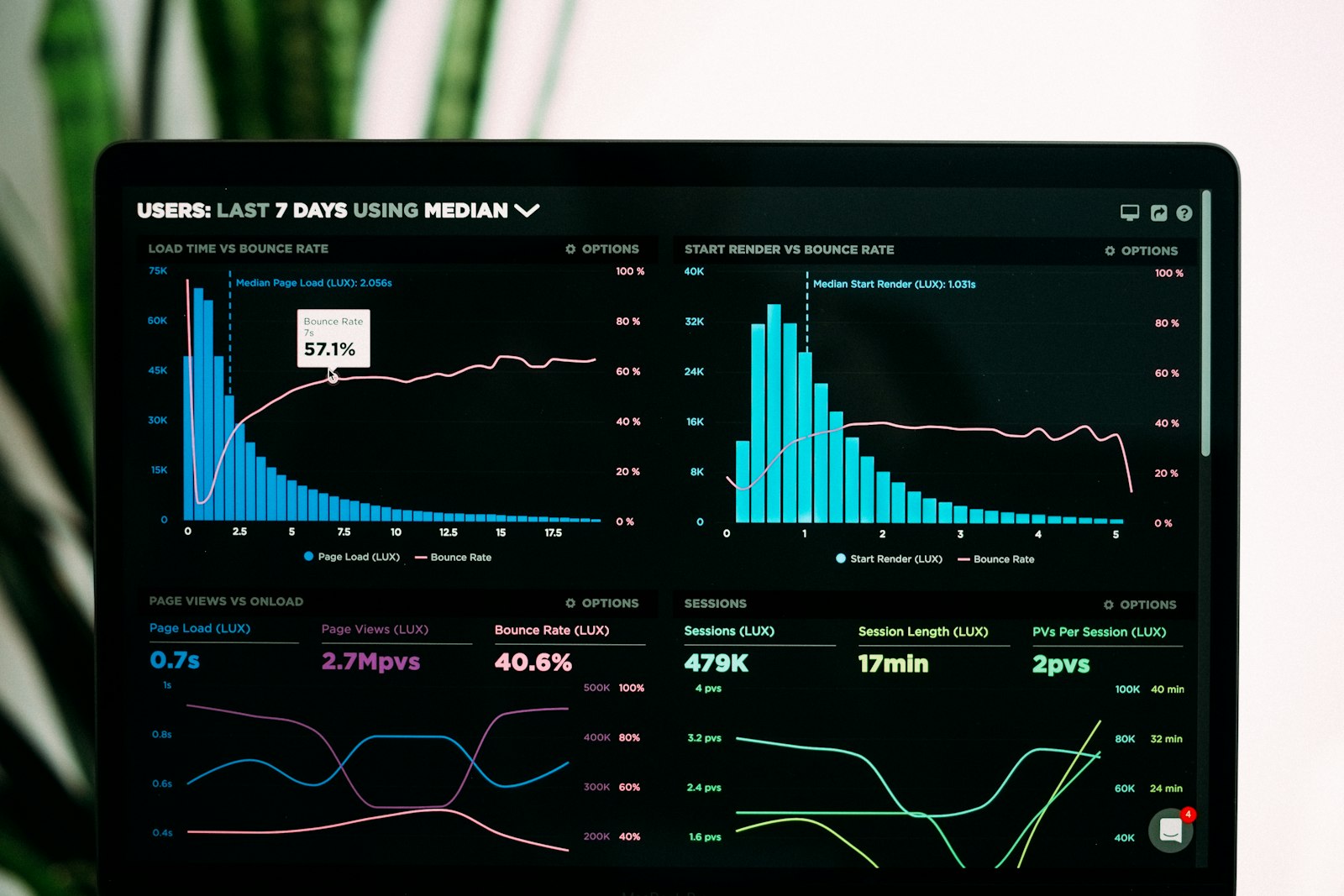
Claude changes this dynamic fundamentally. Instead of relying on rep narration, managers get an AI-synthesized pipeline analysis before the meeting — complete with deal-by-deal risk assessments, engagement patterns, and anomaly detection. The forecast call then becomes a strategic conversation rather than a status read-out.
Teams that have deployed Claude for pipeline analysis report 38% improvement in forecast accuracy and a 40% reduction in time spent in weekly pipeline reviews. More importantly, they're catching deal risks 2–3 weeks earlier — when there's still time to intervene.
What Claude Actually Analyzes in Your Pipeline
Claude's pipeline analysis is only as good as the data you feed it. The richest signal comes from combining structured CRM fields with unstructured deal notes, email summaries, and call transcripts. Here's what Claude examines:
Engagement patterns: How frequently is the customer engaging? Are meetings getting shorter or longer? Has the champion gone quiet in the last two weeks? Declining engagement 3–4 weeks before close date is the single strongest predictor of deal slippage.
Stakeholder mapping: Is there a documented economic buyer? Has the champion introduced the rep to IT security or procurement yet? Multi-threaded deals (3+ contacts engaged) close at 2.3× the rate of single-threaded deals. Claude flags single-threaded opportunities as high-risk.
Stage progression velocity: How many days has the deal sat in its current stage? What's the average days-in-stage for won deals at this size? Deals sitting 40% longer than the historical average in any given stage are statistically likely to slip or die.
Competitive dynamics: Are competitors mentioned in recent notes? What's the competitive positioning? Has the customer asked for reference customers, which often indicates late-stage competitor evaluation?
Technical validation status: For complex sales, has the customer completed a proof of concept? Has security review been initiated? Missing technical validation at late stages is a reliable deal-breaker signal.
See Claude Pipeline Analysis in Action
Our free Readiness Assessment includes a live demo of Claude analyzing a sample pipeline against your current review process. See the difference before committing.
Request Free Assessment →Building a Claude Deal Scoring Framework
The most effective Claude pipeline deployments build a structured scoring framework that Claude applies consistently across every deal. Here's a framework our clients use:
The MEDDIC Health Score: For each deal, prompt Claude to assess Metrics (quantified ROI documented?), Economic Buyer (identified and engaged?), Decision Criteria (formal criteria captured?), Decision Process (next steps agreed?), Identify Pain (specific pain articulated?), Champion (executive sponsor confirmed?). Each dimension gets a RAG (Red/Amber/Green) rating. Deals with 3+ Red dimensions are flagged as high-risk regardless of close date.
Momentum scoring: Claude reviews engagement frequency trends over the last 30 days and compares them to the prior 30 days. Deals with declining engagement velocity get an automatic Amber flag even if the rep has marked them as on-track.
Timeline realism check: Claude compares the stated close date against the current stage and average historical cycle length. Deals where the close date is within 14 days but technical validation hasn't started are flagged as timeline risks.
The output is a one-page deal health summary per opportunity, which managers review before the pipeline call. Reps know the analysis exists — which itself drives better CRM hygiene, since reps start documenting deal context more thoroughly when they know an AI will read it.

Claude for Sales Teams: Complete Implementation Playbook
Proposal automation, pipeline analysis, CRM enrichment, and win/loss frameworks. 47 pages of deployment-ready guidance from 200+ enterprise implementations.
Download Free →Detecting Risk Signals Before They Kill Deals
The highest-value output of Claude pipeline analysis is early warning detection. Most sales organizations discover deal problems during the deal post-mortem — after the loss. Claude surfaces them 3–6 weeks earlier, while there's still time to course-correct.
The "going dark" pattern: A champion who responded to emails within 24 hours suddenly takes 5+ days to reply. Claude detects this from email thread data and flags it. In our experience, "going dark" is the single most predictive loss signal — and it's almost always missed because managers assume reps would escalate it.
Procurement surprise: Deals where procurement is introduced for the first time in the final 2 weeks of a quarter frequently slip. Claude identifies deals where procurement engagement hasn't been documented at late stages and flags them as slip risks.
Reference customer requests at late stage: When a prospect asks for references 2–3 weeks before a stated close date, it often means they're doing a competitive evaluation that wasn't disclosed. Claude flags reference requests as potential re-evaluation signals rather than routine process steps.
Budget re-confirmation gap: Has the economic buyer explicitly re-confirmed budget availability in the last 30 days? For deals over $100K, Claude flags any opportunity where the last budget confirmation is more than 45 days old at Q-end.
Single-threaded at close: Deals with only one internal contact at the 60-day mark have a 67% lower close rate than multi-threaded deals. Claude automatically flags all single-threaded opportunities over $50K regardless of other signals.
Improving Forecast Accuracy with AI Analysis
Forecast accuracy is ultimately about signal extraction — separating what reps believe from what the data indicates. Claude applies a consistent framework to every deal rather than relying on rep confidence levels alone.
The core mechanism is what we call "commit stress testing." When a rep marks a deal as "commit," Claude reviews the underlying deal data and flags any discrepancy between the commit call and the evidence. A rep might commit a deal with a stated close in 10 days — but if email engagement has dropped 80%, there's been no procurement contact, and the last call was 3 weeks ago, Claude surfaces that mismatch before the forecast is submitted.
Across our client deployments, commit stress testing reduces commit misses by 42% in the first quarter of implementation. The bigger cultural benefit is that managers can now have evidence-based conversations with reps about their commit calls rather than relying purely on rep intuition.
For upside/pipeline categories, Claude runs a probability adjustment model based on historical deal patterns at your organization. A deal that looks like your average lost deal (declining engagement, no champion, long-stalled stage) gets a downward probability adjustment even if the rep has it at 50%.
Implementation: Getting Your Team Set Up
Pipeline analysis with Claude is a 3-week implementation for most teams. Here's the typical sequence:
Week 1 — Data architecture: Map your CRM fields to a deal context template. The template is a structured prompt that Claude fills in for each deal: stage, days in stage, last activity, stakeholders, meeting notes summary, next steps, competitive context. Most teams create a simple export process from Salesforce or HubSpot that generates this template per deal.
Week 2 — Prompt calibration: Run Claude on 15–20 historical deals (including losses) to calibrate the risk scoring framework. Compare Claude's risk flags against the actual outcomes. Adjust the scoring criteria until Claude's risk detection aligns with historical reality at your organization.
Week 3 — Live pilot: Run Claude analysis in parallel with your existing review process for two pipeline calls. Compare Claude's risk flags against what managers catch manually. Share the results with the team — in our experience, seeing Claude catch 3–4 risks that the manual review missed is the most effective adoption driver.
After the pilot, most teams have Claude generate a pipeline intelligence report every Monday morning — a 2-page summary of the top risks, top opportunities, and forecast adjustment recommendations for the week. Managers read it before their first rep call. The quality of those conversations improves measurably.
For teams interested in a deeper Claude deployment across the full sales organization, pipeline analysis pairs naturally with proposal automation and CRM enrichment workflows. Together, they deliver the full sales productivity transformation we document in our Sales Implementation Playbook.
The Sales Department implementation guide covers the end-to-end deployment, including change management, manager training, and the KPI framework we recommend tracking in the first 90 days.